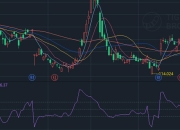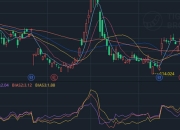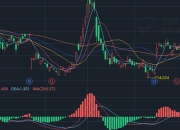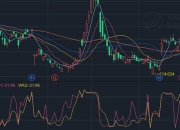
When it comes to stock trading, the term "T" (short for "trading") often appears in discussions of short-term strategies—especially in English-speaking financial markets. "Stock T" typically refers to intraday trading, or "day trading," where investors buy and sell stocks within the same trading day to profit from small price fluctuations. Unlike long-term investing, which focuses on fundamental value and holding assets for months or years, stock T emphasizes technical analysis, quick decision-making, and capitalizing on market volatility. For traders looking to navigate this fast-paced space, understanding the core principles of stock T in English is key to managing risk and maximizing gains.
What Is Stock T?
In the context of stock trading, "T" is shorthand for "trading" and is often used to describe intraday trading strategies. The goal is simple: buy low and sell high (or sell high and buy low) within a single trading session, avoiding overnight risk. Unlike "swing trading" (holding positions for days or weeks) or "position trading" (holding for months), stock T requires traders to close all positions before the market closes. This strategy relies heavily on liquidity (easy buying/selling) and volatility (price swings), as these conditions create opportunities for quick profits.
Key Principles of Stock T in English
To master stock T, traders must grasp three foundational principles: technical analysis, risk management, and discipline.
-
Technical Analysis:
Stock T traders rarely focus on company fundamentals (e.g., earnings reports, revenue growth). Instead, they use charts, indicators, and patterns to predict short-term price movements. Common tools include:- Moving Averages (MA): Identify trends (e.g., 50-day MA for short-term momentum).
- Relative Strength Index (RSI): Measure overbought/oversold conditions (RSI > 70 = overbought; RSI < 30 = oversold).
- Candlestick Patterns: Signal reversals (e.g., "hammer" for bullish reversals, "shooting star" for bearish reversals).
- Volume: Confirm price trends (high volume + rising price = strong bullish momentum).
For example, a trader might use a "golden cross" (50-day MA crossing above 200-day MA) to enter a long position, or a "death cross" (50-day MA crossing below 200-day MA) to short a stock.
-
Risk Management:
Day trading is high-risk, so managing capital is critical. Key rules include:- Stop-Loss Orders: Automatically sell a stock if it drops to a predetermined price (e.g., 2% below the buy price) to limit losses.
- Position Sizing: Risk no more than 1–2% of total capital per trade (e.g., $1,000 capital = max $10–$20 risk per trade).
- Profit Targets: Set realistic goals (e.g., take profits at 1–2% gains) to avoid greed and lock in gains.
-
Discipline:
Emotions are the enemy of stock T. Traders must stick to their strategies, avoid "chasing losses," and resist overtrading. As the saying goes: "The market is always right—don’t fight the trend."
Common Stock T Strategies in English
Traders use various tactics to execute stock T, depending on market conditions. Here are three popular strategies:
-
Scalping:
Scalping aims to profit from tiny price changes (e.g., 0.1–0.5% per trade) with high volume. Traders open and close positions within seconds or minutes, relying on tight bid-ask spreads and fast execution. For example, a scalper might buy 1,000 shares of a volatile tech stock at $100.01 and sell at $100.02, earning $100 (excluding fees) in under a minute. -
Momentum Trading:
This strategy involves buying stocks breaking out to new highs or selling short stocks breaking down to new lows. Traders use breakout patterns (e.g., "triangle," "flag") and volume spikes to confirm momentum. For instance, if a stock jumps 5% on high volume after a positive earnings announcement, a momentum trader might enter a long position, expecting the trend to continue. -
Mean Reversion:
Mean reversion assumes that stock prices will return to their historical average (or "mean") over time. Traders use indicators like the Bollinger Bands (where 90% of price action falls within the upper and lower bands) to identify overbought/oversold levels. For example, if a stock hits the upper Bollinger Band (overbought), a trader might short it, betting on a pullback to the middle band.
Risks of Stock T
While stock T can generate quick profits, it is not without risks:
- High Volatility: Prices can swing wildly, leading to large losses if trades go against you.
- Transaction Costs: Frequent trading (buying/selling) incurs fees (commissions, spreads), which can eat into profits.
- Psychological Pressure: The fast pace of day trading can cause stress and emotional decision-making.
- Margin Risk: Many traders use leverage (borrowed money) to amplify gains, but this also amplifies losses.
For beginners, it’s advisable to start with a demo account (paper trading) to practice strategies without risking real capital.
Conclusion
Stock T, or intraday trading, is a dynamic strategy that requires technical skill, risk management, and discipline. By mastering tools like moving averages, RSI, and candlestick patterns—and adhering to strict risk rules—traders can capitalize on short-term price movements in the English-speaking markets. However, success in stock T takes time, practice, and a willingness to learn from mistakes. As the legendary trader Jesse Livermore once said: "The stock market is never obvious. It is designed to trap the majority of investors." For those who stay disciplined and strategic, stock T can be a rewarding way to engage with the markets—just remember: "Cut losses short, let profits run."
版权声明
本文仅代表作者观点,不代表本站立场。
本文系作者授权,未经许可,不得转载。